Tuesday, January 20, 2015

Becky's Breakfast


With our son and his fiancé at home this weekend we moved from the bar to the dining room table for breakfast. We had our usual Saturday breakfast of bacon, homemade sausage, grits, biscuits, fresh free-range eggs, strawberry freezer jam and coffee. Breakfast has always been one of our favorite meals of the day and for years duck season brought a huge crowd to the house. Hunters knew breakfast was served at 9:00 because Becky didn't get out of bed until then.

One duck hunting story told and retold involves two very competitive golden retrievers. On one very cold morning the dogs were allowed to come into the house to "thaw-out". They soon found their way under the dining table and began fighting for a dropped biscuit. Everyone had to clear out and break up the fight before finishing breakfast. Now that's a "country breakfast".


Recently, we were entertaining some young couples from church and served them coffee from our old percolator. We were amazed that they never seen coffee made that way. In fact they thought it was better coffee than what they got at Starbuck's. We ended up making several pots to satisfy their curiosity. We tried other coffee makers and they were good, just not as good as the percolator.

If you want a good country breakfast you will need some fresh stone-ground grits, free-range eggs, and homemade jelly or honey. We get our sausage and bacon from Dobbins' Grocery at North Sand Mountain (near the high school). We have been told that they make one ton of sausage a week from hogs they raise themselves. People come from all over the southeast just to buy meat at this store. Now check out our blog on making biscuits, and you will have all you need for a great country breakfast.


Friday, January 9, 2015

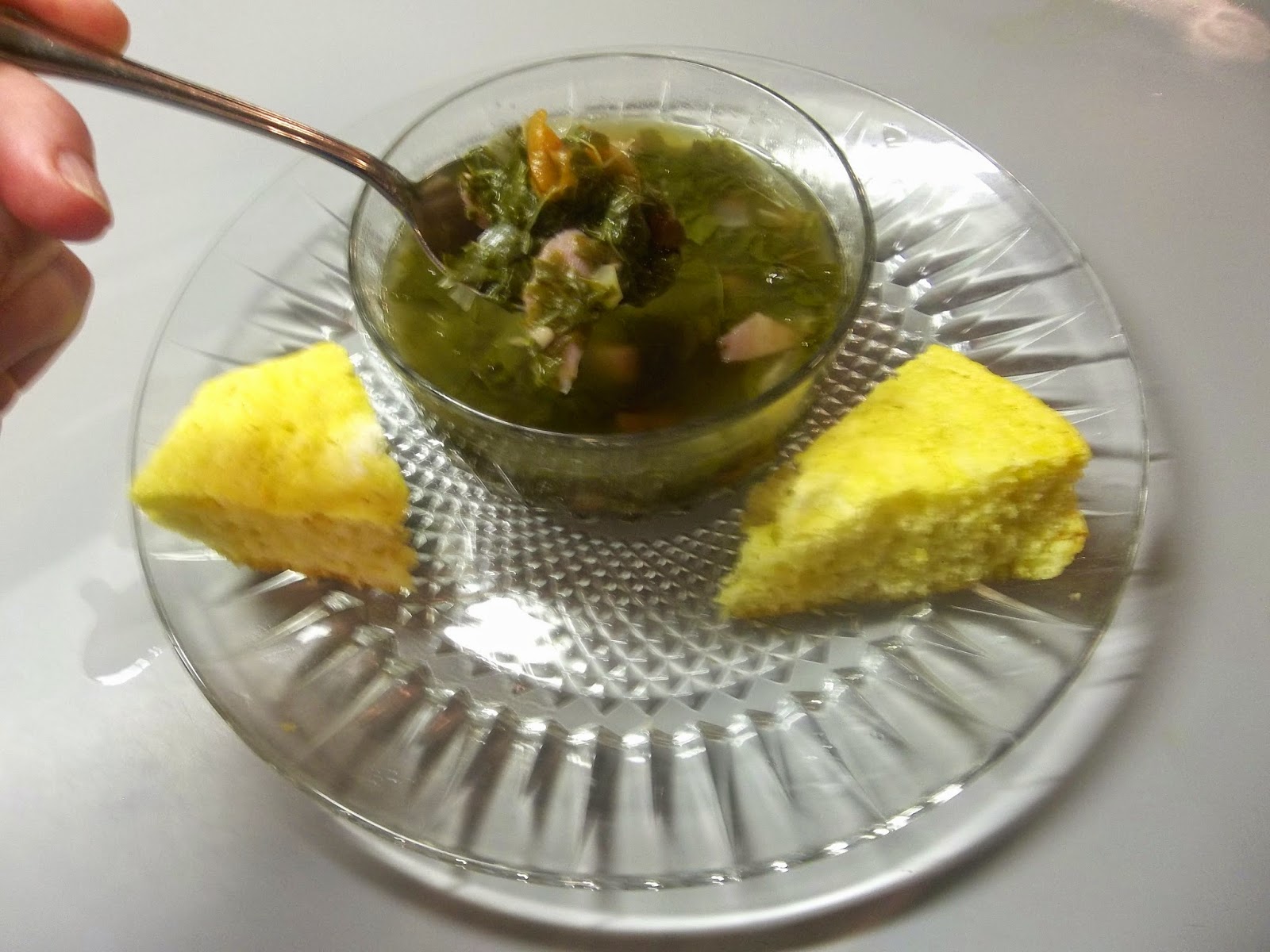
Turnip Green Soup


Occasionally you run across a recipe that may not look very tasty but is truly delicious. If you like beans and turnip greens then "Swamp Soup" is one of those dishes you really should try. You might even decide to call it, "Turnip Green Soup".

Here is the recipe if you are interested. First, cook your turnip greens until tender and drain. Saute a large onion in a small amount of olive oil. In a large pot add two cans of chicken broth, the onions, and about a quart of finely chopped turnip greens (You may add more or less of the greens to suit your taste). Take a can of great northern beans, pinto beans, red beans, and black beans and drain away the liquid. Place the beans in with the turnip greens. Add 1-2 cups of chopped ham. Every summer I make pepper sauce with vinegar and hot peppers. I now chop up some of the hot peppers and add to the mix. I also pour in about one quarter cup of the hot pepper sauce. Add pepper, salt, and about a half teaspoon of garlic powder. You may need to add some water if the soup is too thick. Lastly, I add a dash of Tabasco sauce. Be very careful with the Tabasco sauce. Add a small amount at a time and sample it until you get the correct amount for your taste. Cook for about an hour.


Now all you need is a pan of cornbread to go along with the soup. Serve this up on a cold winter's day and you will not only have a satisfying meal but a healthy one, too. Hope you enjoy it!

Wednesday, January 7, 2015

Preparing For The Cold

To build a good fire you must the right ingredients just like any recipe. We start with a little newspaper and small kindling. The small kindling is waste from making oak shingles. (See earlier blog on shingle making). The pieces of kindling are about the side of a pencil. As I split the shingles I  put them in peach baskets and keep them in the dry until needed. If I don't have any shingle scraps, I use a hatchet to split red cedar in splits. 

After the kindling begins to burn, we add small limb wood or split wood no bigger than two to three inches in diameter. After this fire is burning well, you can add your regular size logs. When we have a really good bed of coals, we add a backlog (large log) to burn through the night. All of our wood is cut in the spring so it is well seasoned by winter. 
We have two fireplaces in our house, but this fireplace produces much more heat than the first one we built. It was built by a master rock mason by the name of Larry Bain. Larry built over twenty fireplaces for me in the different houses I have built over the years . He wasn't just a rock mason but an artist in stone. Unfortunately, Larry passed away a few years while in his 50's.

 The hearth of this fireplace is about 12 inches off the floor with a 36 inch damper. The damper allows us to control how much heat escapes up the chimney. If you keep a fire burning for several days, the sandstone rock will heat up and radiate a great deal of energy into our thirty-two foot sunroom. The stone in this fireplace was reused from a family homesite built in the 1830's. In our home we incorporated stone from over forty house places from here in Yucca Valley. With the temperatures dipping down into the single digits, we will keep a roaring fire for several days. In a couple of days you can warm yourself in front of it, but you won't stand there long. There is no warmth in this world like the warmth from a good fireplace, or the peace that the flicking flames bring you on a cold and dark night.


Friday, January 2, 2015

Homemade Deer Jerky


Even though we are duck hunters, we do like deer jerky. Fortunately we have friends that provide us with fresh deer meat from off our own farm. This year, Daniel and I were given the backstrap from a young buck. The backstap is the muscle on each side of the backbone. The tenderness of the meat makes it great for jerky.

The first thing we do is cut off the silver skin (connective tissue) from the meat as well as trimming off any fat. We then cut it into one quarter inch strips. It is important to cup across the grain of the meat. Next, we soak the meat in Dale's steak sauce and sometimes add extra black and red pepper. Different seasonings can be added to suite your individual taste. We just prefer Dale's, a produce made in Birmingham, AL and distributed widely across the South. We marinade it for at least two hours and may soak it overnight.  


We use an American Harvest Snackmaster Dehyrator 2400 that we have had for many years. It has an adjustable thermostat. The deer jerky is dried at a temperature of 145 degrees for about six hours. Any longer and the meat will be too crisp for our taste. We like ours chewier.  (We also use the dehydrator to dry fruit in the summer.) To store the jerky, we put it in quart baggies and freeze. Usually there isn't enough left to freeze as it is such a great snack to take hunting. You can also use this same method to prepare beef jerky.                                                                  

Wednesday, December 31, 2014

Becky's Homemade Biscuits


The key to making great biscuits is having the right ingredients. I use White Lily Unbleached Self-rising flour, Crisco, and buttermilk. Since I have made thousands of biscuits in the last forty years, I do not measure anymore. However, for you I will give you the approximate amount for each ingredient.

Use one cup of flour to three tablespoons of shortening. For a larger batch just double the flour to two cups flour and six tablespoons shortening. Be sure to cut the shortening into the flour. (I just use two dinner knives or you could use a pastry cutter.) Slowly add enough buttermilk to moisten the flour and shortening. Stir until all the flour and buttermilk is mixed. Do not get it too wet. Sprinkle flour on a board and pour the dough out. Sprinkle a little more flour on top and work into a ball with
your hands. Roll it out to about three quarters of an inch thick. Next cut out your biscuits. I use a drinking glass to cut out the biscuits because it has a larger diameter and makes a thicker biscuit. Bake at 375-400 degrees depending on your oven until golden brown.

Survival Cooking


Recently we had several power outages reminding us to get prepared for the inevitable loss of electricity that occurs in the country. We have several propane lanterns and stoves for providing light and cooking food. Baking however poses a slightly different problem. We have two different methods we use to bake in our fireplace. The tried and true method for hundreds of years is the cast iron Dutch over (pictured on the left) and our other method is the high tech cardboard box covered with heavy duty aluminum foil better knows as a reflector oven.


Using the Dutch oven method, we placed the biscuits in a round pan and put them on a trivet in the Dutch oven. We then shoveled out some of the coals and placed the Dutch oven over the coals. Next we placed several scopes of hot coals on the top of lid. The lid has a rim that holds the coals in place.


 You can check the bread by lifting the lid with a tool made by a blacksmith. This tool is specially designed just for lifting the lid without getting burned. Making the biscuits with this method took about 32 minutes.


Here you see the results of using the reflector oven. We placed the open front of the box toward the fire. The heat can be controlled by moving the box closer or further away from the fire. We did elevate the pan on a trivet so heat could circulate underneath. We found it necessary to do this in 1993 when we had a huge snowstorm and was out of power for eight days.  By trial and error we found that elevating the pan created more even cooking. During the snowstorm we had biscuits every morning as well as homemade cakes. The reflector works especially well with a fireplace because the heat is reflected forward. If used at a campfire, it will probably take longer to cook.


Here are the two pans of biscuits we cooked. The reflector oven took a few minutes more because we did not have a large bed of coals. In bad weather our fireplace burns constantly and has a better bed of hot coals, thus reducing cooking time. You really cannot tell the difference between the two. Both methods did the job in almost the same time as an electric oven. So when bad weather hits, either method will keep you in bread, cakes, and pies.

Saturday, December 27, 2014

Crockpot Yogurt

You will need milk (whole or low fat), powdered milk, crockpot, food thermometer, whisk or electric mixer, and several tablespoons of plain yogurt with active cultures. (Once you make the yogurt, you can reserve some of it to inoculate your next batch.) I use a one quart crockpot but have used a larger one.


Using a whisk or electric mixer, mix the milk with one half package of powdered milk in a bowl. The powdered milk I buy comes in 3 and 3/4  cup packages.When thoroughly mixed put the mixture in your crockpot and turn it on.


You will heat the mixture until it reaches 180 degrees. This may take several hours depending on your crockpot. Once it reaches 180 degrees, turn off the crockpot (leave on the lid) and allow to cool. At this time remove your plain yogurt from the refrigerator and leave on the counter until it reaches room temperature. Let the mixture in your crockpot cool to 120 degrees. When the temperature of the milk mixture reaches 120 degrees, add 2-3 tablespoons of the plain yogurt and whisk.


Now put the lid on the crockpot and cover in several layers of towels. This allows the mixture of cool very slowly. Leave 8-12 hours undisturbed.


Now you have fresh yogurt with active bacterial cultures. Store in the refrigerator. After several days you may have some whey separate from the solids. Just pour the liquid off. When you are ready to eat, add fresh fruit and honey. Be sure to save several tablespoons for your next recipe.